How to Choose the Perfect Round Brilliant Diamond Solitaire Pendant
How to Choose the Perfect Round Brilliant Diamond Solitaire Pendant
Most people spend weeks researching a diamond solitaire pendant and still walk away second-guessing themselves. This guide will just walk you through what actually matters so you can make a decision you will feel good about long after the purchase.
Why So Many People Choose the Round Brilliant Cut
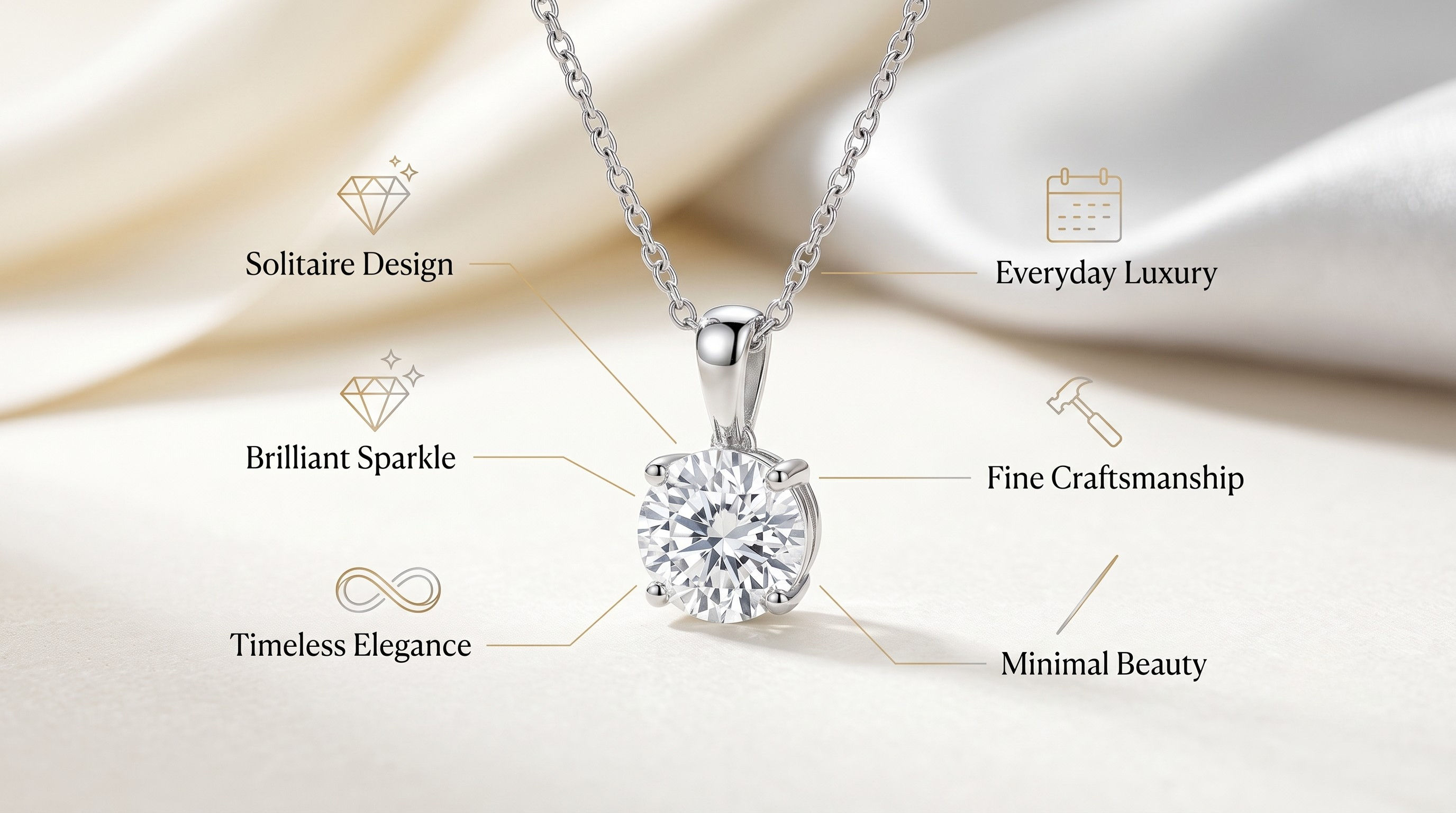
Ask ten jewellers which cut they would put in a diamond solitaire pendant, and most will say round brilliant without much hesitation. It has 58 facets, and the proportions have been dialled in over decades to push as much light back through the top of the stone as possible. The result is that instant sparkle people associate with diamonds, and it shows up in daylight, candlelight, office lighting, all of it.
As a diamond solitaire pendant, the round brilliant also happens to sit very well on the chest. The symmetry means it does not tilt or catch awkwardly on the chain. Small practical thing, but it matters when you are wearing it every day.
Picking Your Carat: What the Numbers Actually Mean
Carat measures weight, not size, though in practice, a heavier stone is usually a bigger stone. Cut quality is far more essential to a diamond's brilliance than its carat weight, and a well cut smaller stone will always outperform a poorly cut larger one.
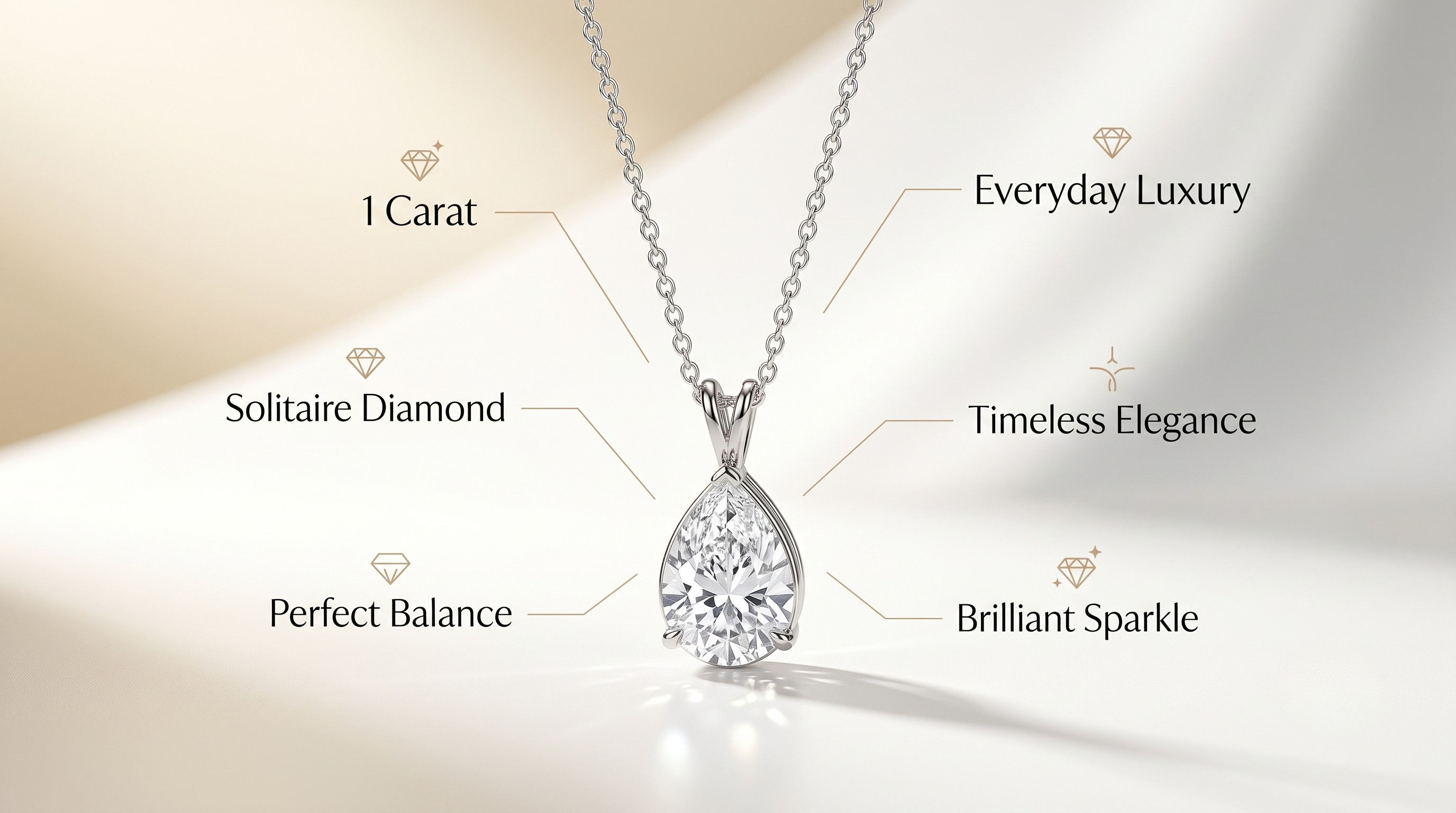
1 Carat Diamond Necklace Solitaire
A 1-carat diamond necklace solitaire is genuinely the most popular choice for good reason. It is noticeable that you are not squinting to see it, but it does not overwhelm the neckline. A lot of women who buy one end up wearing it almost every day, and that is kind of the whole reason for a solitaire pendant. If you aren't sure where to start, start here. You can always go bigger later, but most people find they do not really need to.
2 Carat Diamond Necklace Solitaire
Going up to a 2-carat diamond necklace solitaire is a different kind of purchase. The stone is genuinely eye-catching at that size; people will notice it, and some will ask about it. It works best for someone who wants that and does not mind a slightly heavier pendant. For anniversaries or big milestones, two carats reads as intentional and generous. Just make sure the cut is excellent, because at that size, any dullness in the facets is harder to ignore.
"Cut quality will always be more important than carat weight. A beautifully cut one-carat stone will outsparkle a dull two-carat every single time."
Lab-Grown Diamonds: What You Should Know Before Deciding
Lab Grown Diamond Solitaire Necklace
A lab grown diamond solitaire necklace gets a lot of questions, mainly from people who are not sure if lab grown is "real". It is. Same carbon structure, same hardness, same optical behaviour. If you put a lab grown and a mined diamond side by side and asked a gemologist to sort them without specialist equipment, they probably couldn't do it reliably. The practical difference mostly comes down to price. Lab-grown stones typically cost significantly less per carat, which usually means buyers can go up a size or spend that same budget on a better cut instead of settling.
Other Shapes That Work Well as Solitaire Pendants
The round brilliant is the default, but depending on the person, one of these two alternatives might actually suit better.
Heart Solitaire Necklace
People either love a heart solitaire necklace or they do not; there is not much middle ground. The shape is deliberately sentimental. If you are buying it as a gift with emotional meaning attached to a relationship milestone, a mother's piece, or something personal, the heart cut carries that weight in a way a round brilliant does not. For self-purchase, it just comes down to whether you like wearing something expressive.
Emerald Cut Solitaire Necklace
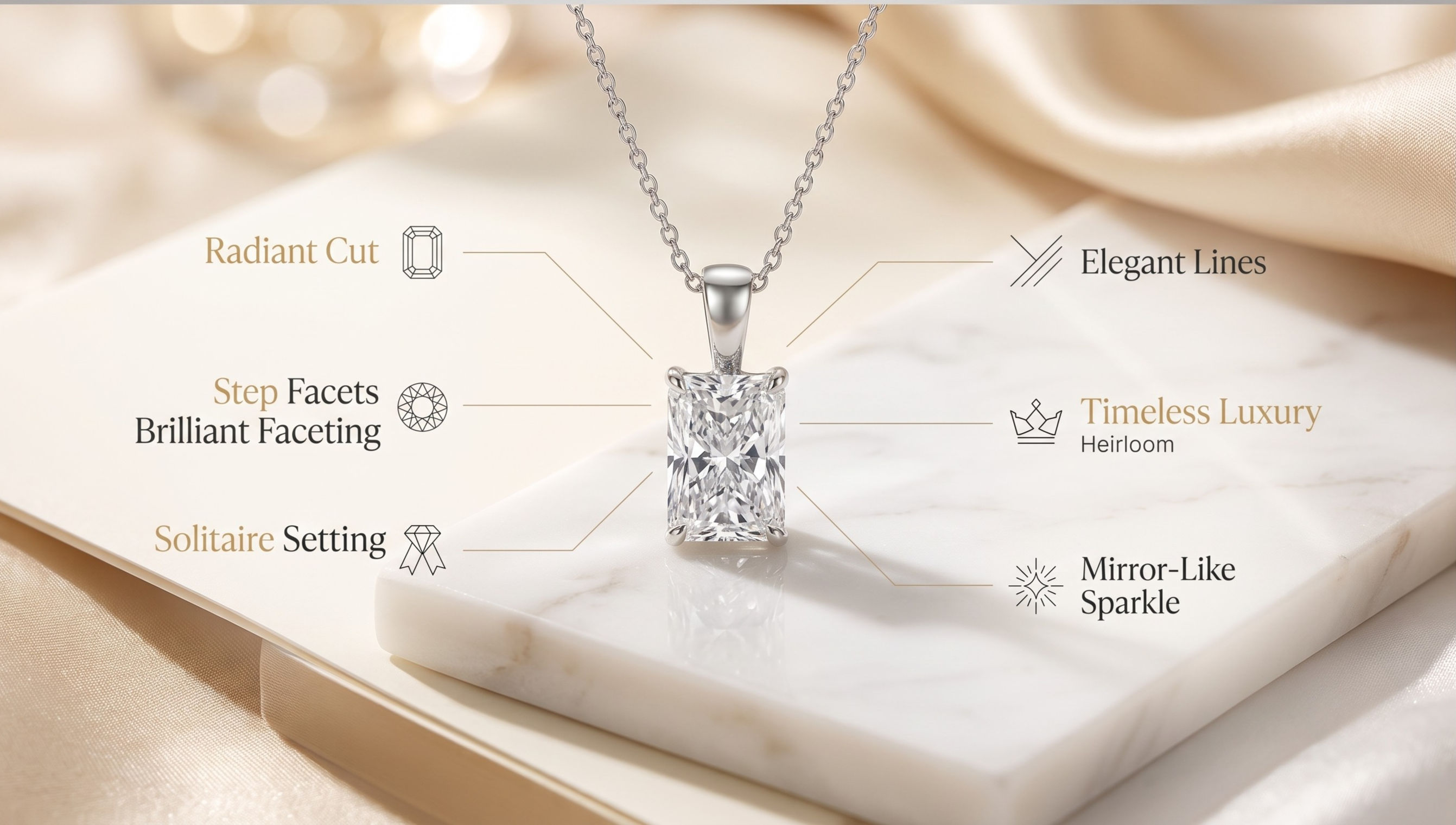
The emerald cut solitaire necklace is for buyers who find the round brilliant a bit obvious. The step cut facets give it a completely different look: less flash, more depth. It is quieter, and it has a quality to it that people with strong personal style often respond to. Consider this if you want something less common and quieter.
The Practical Checklist Before You Buy
A woman's diamond solitaire necklace lives or dies on a few specific decisions. Get these right and everything else falls into place:
- Cut grade: For a diamond solitaire pendant, this is the one you should not compromise on. Excellent or ideal cut only. The stone is the whole piece; it has to perform.
- Chain length: Sixteen to eighteen inches puts the pendant right at the collarbone, where it tends to sit most naturally and photograph best. Too long and the stone gets jumbled in between layers or pressed up against clothing.
- Metal: White gold and platinum make the stone look icier and brighter. Yellow gold adds warmth. Go with what the wearer already gravitates toward in their other jewellery; that is usually the right call.
- Setting: Four-prong settings let more light reach the stone. Bezel settings protect the girdle better and look cleaner on some styles. If the person is active or works with their hands a lot, a bezel is the safer choice.
Choosing Your Diamond Solitaire Pendant
- Cut is everything: For a solitaire pendant, an excellent or ideal cut is the one non-negotiable. The stone is the whole piece; it has to perform in every light.
- Round brilliant is the reliable choice: 58 facets, decades of optimisation, and it sits on the chest without tilting. There is a reason it's the default.
- One carat is more than enough for most people: Noticeable, wearable every day, and the right size for the collarbone. Two carats is a statement; make sure you want it read that way.
- Lab-grown is not a compromise: Chemically and visually identical to mined diamonds, usually at a significantly better price per carat.
- Shape reflects personality. Round brilliant for everyone, a heart for something sentimental, and an emerald cut for someone who finds the obvious a bit dull.
- Chain length matters more than people think. Sixteen to eighteen inches keeps the stone at the collarbone. Too long and it disappears into layers.
Shop Diamond Solitaire Pendants at Layla Diamonds
At Layla Diamonds, the pendant collection covers round brilliants from one to two carats, both lab-grown and natural, in a range of settings and metals. Every piece has been selected based on cut quality first, because that is what you will actually see when you wear it.
If you want to see pieces in person and take your time with the decision, Layla Diamonds offers private appointments. No pressure, no rushing, just a proper look at your options with someone who can answer the questions that actually matter to you.
Frequently Asked Questions
1. Does a diamond solitaire pendant need to match my other jewellery? ▼
No, a solitaire pendant works with any metal. Only match if your jewellery collection is very coordinated and consistency matters to you. Otherwise, pick the metal that suits the stone and the person wearing it, and let the rest sort itself out.
2. Is a 1-carat diamond necklace solitaire actually big enough to see? ▼
Yes, a 1 carat diamond necklace solitaire is clearly visible at collarbone length. You are not squinting to find it. Cut quality matters far more than size when it comes to sparkle, so a well-cut one-carat stone will perform better than a poorly cut larger one every time.
3. Can I wear a diamond solitaire pendant in the shower or to the gym? ▼
Best avoided. Soap, chlorine, and sweat dull the stone and weaken the chain over time. Take it off before swimming, showering, or training. It takes about five seconds, and it will keep the piece looking the way it should for a lot longer.
4. What is the difference between a lab-grown diamond solitaire necklace and a moissanite one? ▼
Lab grown diamonds are real diamonds. Moissanite is a different stone entirely, a cheaper alternative that throws more coloured light rather than the white brilliance of a diamond. They are not the same thing and should not be compared as if they were equivalent options.
5. How do I figure out the right chain length for a woman's diamond solitaire necklace? ▼
For a woman's diamond solitaire necklace, 16 to 18 inches suits most people, setting the pendant neatly at the collarbone. That is the length where it photographs best and sits most naturally against the chest. If layering with other necklaces, go slightly shorter so the pendant doesn't disappear into the stack.


Comments
Post a Comment