The Timeless Allure of Diamond Rings for Women
The Timeless Allure of Diamond Rings for Women
Diamond rings for women have been a tradition for generations, symbolizing enduring love, celebratory passion, and enchanting style. They have this classic allure from their rarity, natural beauty, durability, and rich history in our lives as a symbol of eternal beauty across the ages. The combination makes a powerful symbol that is beyond passing trends, transforming them into gifts of legacy and passage.
Why is the Popularity of Diamond Rings for Women So Enduring?
.jpg?updatedAt=1771435138908)
Diamond rings for women never go out of style because they are brighter than anything else, delightfully hard to wear out, and hold great symbolic significance. These characteristics are why many take the form of keepsakes that stand as timeless reminders of those life long bonds and celebrations.
This enduring fascination is due to several factors:
Hard As A Rock: At 10 on Mohs’s hardness scale, diamonds are the hardest gemstone around and are resistant to scratches better than any other stone.
Refraction: The way they bend light creates a fire that won’t be replicated by other stones.
Heirloom in Quality: These are highly durable and are built for generations of traveling British families.
Cultural Prestige: They have been the benchmark for excellence in the UK jewellery industry for generations.
How does light refraction make them more attractive?
When it comes to how they interact with light, no gemstone compares to diamonds. This quality, loosely referred to as “refraction,” generates the iconic sparkle that people throughout history have found mesmerising. For a lot of people, diamond rings for women are not just any piece of jewellery - it is art that reflects the light.
Key light-reflecting properties include:
Brilliance: The white light reflected back to the eye.
Fire: The dispersion of light into rainbow colours.
Scintillation: The flashes of light produced when the ring moves.
Why Are Diamonds a Symbol of Everlasting Love?
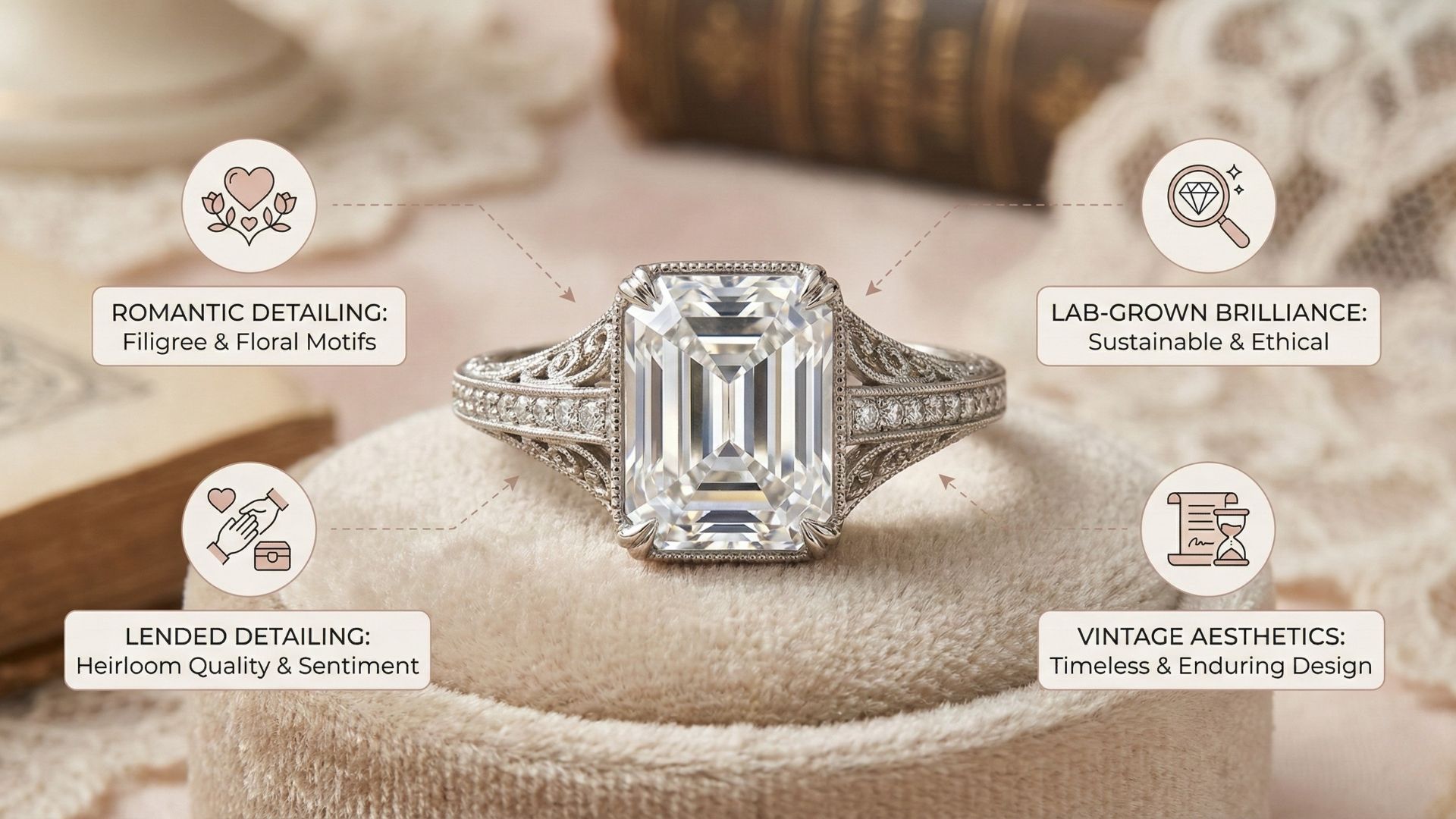
Diamonds represent never ending love because of their hardness and rarity, meaning a diamond could not be broken or destroyed. Their fiery flash also symbolizes the fire and joy that is always alive within a committed relationship, which makes them a fitting representation of forever.
This symbolism has roots in history:
- History and Origin: Adamas is actually from the Greek language, meaning unconquerable, representing an unbreakable connection.
- The Ring: The ring is circular, symbolic of a path with no beginning and no end.
- Contemporary Tradition: After all, it has become one of the iconic diamond wedding bands for women since the early 20th century.
Why Have Diamonds Become a Symbol of Self-Accomplishment?
The diamond has moved beyond romance in British culture now. It's evolved into a badge of personal accomplishment and freedom. More and more, women are going out and buying themselves diamond necklaces to celebrate career advancements, promotions or personal achievements.
This trend is driven by:
Financial Independence: Women are investing in high-priced assets for themselves more than ever.
Versatility: In today's modern age, diamond wedding bands for women are worn as a daily fashion accessory.
Empowerment: The acquisition of a diamond may represent a personal triumph and reward for overcoming hardship.
How Are Quality Diamond Rings Assessed in the UK?
In the UK, diamond rings are mostly categorised according to the “4 Cs”: carat (weight), cut, colour, and clarity. Some of the best UK jewellers, from London's Hatton Garden to Birmingham's Jewellery Quarter, follow these standards, and will even supply lab certification (from the likes of GIA or IGI) to confirm their products' quality.
Diamond ‘Cut’ - what does it all mean?
The term is frequently utilised to describe the most crucialfactor in any stone-the cut. It is a reference to the exactness of the facets, not to the formation. A well-faceted diamond bounces light around in its interior and then sprays it back out. If a diamond is cut too shallow or too deep, it loses its “life” and looks dull.
The most popular cut grades in the UK are:
- Ideal: Extremely high refraction and brilliance.
- Very Good: Great shine and usually a bit more dollar-friendly.
- Good/Fair: Not a cut normally used for the best diamond wedding bands for women as they are not 'fiery' diamonds.
Buyers Guide: Colour And Clarity - What To Know?
.jpg)
Colourless to light yellow are graded as D to Z. In the UK, the most popular diamonds are D-G in color. Clarity grade is a measure of “inclusions” or internal birthmarks. Although flawless diamonds are scarce, a VS1 or higher grading is "eye-clean."
Tips on purchasing for Colour and Clarity:
- The “Sweet Spot”: G Colour and VS2 Clarity are often the best value for you in terms of visual appearance.
- Types of Inclusions: There can be “black” inclusions as well as “white”, but more subtle.
- Metal Pairing: Yellow gold can conceal a lower color grade stone (think H or I).
What Part Does Metal Selection Play in Your Ring’s Allure?
The metal in diamond rings for women is important to their appearance and lifelong value. In the UK, these would include Platinum or 18ct Gold. Platinum is a naturally white metal that is the color of the portion you see, which does not change or tarnish, and is hypoallergenic.
Popular metal options:
Platinum: It’s the best one going. The stones will stay worry-free forever and ever.
18ct Yellow Gold: A traditional warm option that is currently popular in the UK.
18ct White Gold: Clean and bright (if regularly rhodium plated).
18ct Rose Gold: Provides an antique, romantic look.
What are the ethical implications of diamond sourcing?
Ethical diamond sourcing in the UK aims to guarantee that all diamonds are “conflict-free” and sustainably mined. The UK government backs the Kimberley Process, which aims to prevent trade from funding violence or human rights abuses.
What to look for in ethical sourcing:
Kimberley Process Certification: A way to verify that stones are not from conflict zones.
Responsible Jewellery Council: Here, look for jewellers who have this certification.
Traceability Reports: Several women's diamond wedding bands now include information on origin.
Which Is Best: Lab-Grown or Natural Diamonds?
Determining between a lab-created diamond and a natural diamond for women's diamond wedding bands is about personal preferences. Lab-grown diamonds are simply chemically, physically, and optically identical to natural diamonds.
Natural Diamonds: Take billions of years to form; have a “rare” essence.
Lab-Grown Diamonds: Made in weeks; much more affordable.
Sustainability: Since lab-grown stones don’t have the same sort of above-the-surface environmental cost that any truly precious stone has with respect to mining, it is often a more sustainable choice.
Choosing the Perfect Setting Style for Your Diamond?
The “setting” is the way in which the diamond is set. This can be detrimental to the overall "Allure" of women's diamond wedding bands.
Solitaire: A single diamond with a prong holds the most timeless look.
Halo: A middle diamond surrounded by smaller diamonds; enhances overall size.
Pavé: A setting with a band “paved” with small stones; common in diamond wedding bands for women.
Bezel: A metal frame around the diamond; it provides optimal safety.
How does sustainability affect UK buyer habits?
Sustainability is one of the main forces behind today’s UK jewellery market. This means that the company use recycled precious metals and creating carbon-neutral diamonds.
Sustainable trends in the UK:
Recycled Gold: This is new gold that’s been made using reclaimed processed gold rather than newly mined.
Pre-loved Rings: Shopping vintage to be more eco-friendly.
Carbon Neutrality: Opting for brands that offset their production emissions.
Conclusion
The time-honored beauty of diamond rings for women can be attributed to a combination of natural science and human emotion. From the rigorous quality criteria of the 4 Cs to prioritising ethical sourcing in UK, knowing these factors gives buyers a degree of control. Whether you’re drawn to the historical rarity of a natural stone or the technological ingenuity of a lab-grown gem, the diamond ring holds huge significance in terms of identity. Ultimately, women's diamond wedding bands and engagement pieces are enduring narratives of love that will continue to shine for generations.
Frequently asked questions
1. How did diamonds become the most favoured stone for rings? ▼
Unrivaled in their toughness (a hardness of 10 on the Mohs scale) and bursting with the most brilliance imaginable, it is beyond impossible to match the beauty of diamonds.
2. What are the “4 Cs” of diamond quality? ▼
Diamonds are rated for Cut (sparkle), Colour (whiteness), Clarity (purity) and Carat (size). It is widely believed that the cut is the most critical for ”life” and brilliance.
3. Lab-Grown vs. Natural – Is there a difference? ▼
In physical properties and chemical constituents, they are the same. And now, diamonds are also being hatched in the lab to make jewels that cost less and look identical to those that were harvested from the earth more than a billion years ago.
4. Which is the best metal for a diamond setting? ▼
Platinum: The most durable AND least allergenic of metals, platinum is the best choice. Then for the traditionalist or someone who prefers a warmer look, there is always 18ct Gold (Yellow, White and Rose).
5. How do I know if a diamond is ethically sourced? ▼
Look for the Kimberley Process Certification, which ensures stones are conflict-free, or check if the jeweler is a member of the Responsible Jewellery Council.


Comments
Post a Comment