Why Are East-West Diamond Bands Becoming So Popular?
Why Are East-West Diamond Bands Becoming So Popular?
A National Gallery afternoon, a shared opinion about a painting, and two rings that faced a different direction on purpose.
Finley had wandered into the National Gallery on a Thursday afternoon because he had an hour to kill before a meeting near Trafalgar Square, and it was raining. He'd ended up standing in front of a Vermeer for longer than he'd planned, and when he said something half out loud, just a thought about the light in the painting, the woman standing next to him said exactly what he'd been about to think next. He turned. She turned. There was a moment where they both seemed to realise they'd interrupted the other's train of thought and arrived at the same place simultaneously. Florence said later it felt less like meeting someone and more like recognising them.
There was no awkward phase. They talked through the whole room, then the next one, and by the time they'd made it back to the entrance, he'd asked her to dinner, and she'd said yes without a pause. It wasn't surprising to either of them. That's what made it feel like something. The twist, they'd decide later, was that both of them had been convinced they'd spent years being impossible to meet. Then a Vermeer and a stray comment changed everything.
What Makes East West Diamond Bands Different
Most rings are set north to south, stone sitting upright, pointing toward the fingertip. East-west diamond bands rotate 90 degrees, orienting the stone horizontally across the finger instead. It sounds like a small change, and technically it is. But visually, it shifts the entire character of the ring. The stone lies across the width of the finger rather than along its length, which creates a wider, more architectural look and a silhouette that's unlike anything in the traditional setting vocabulary.
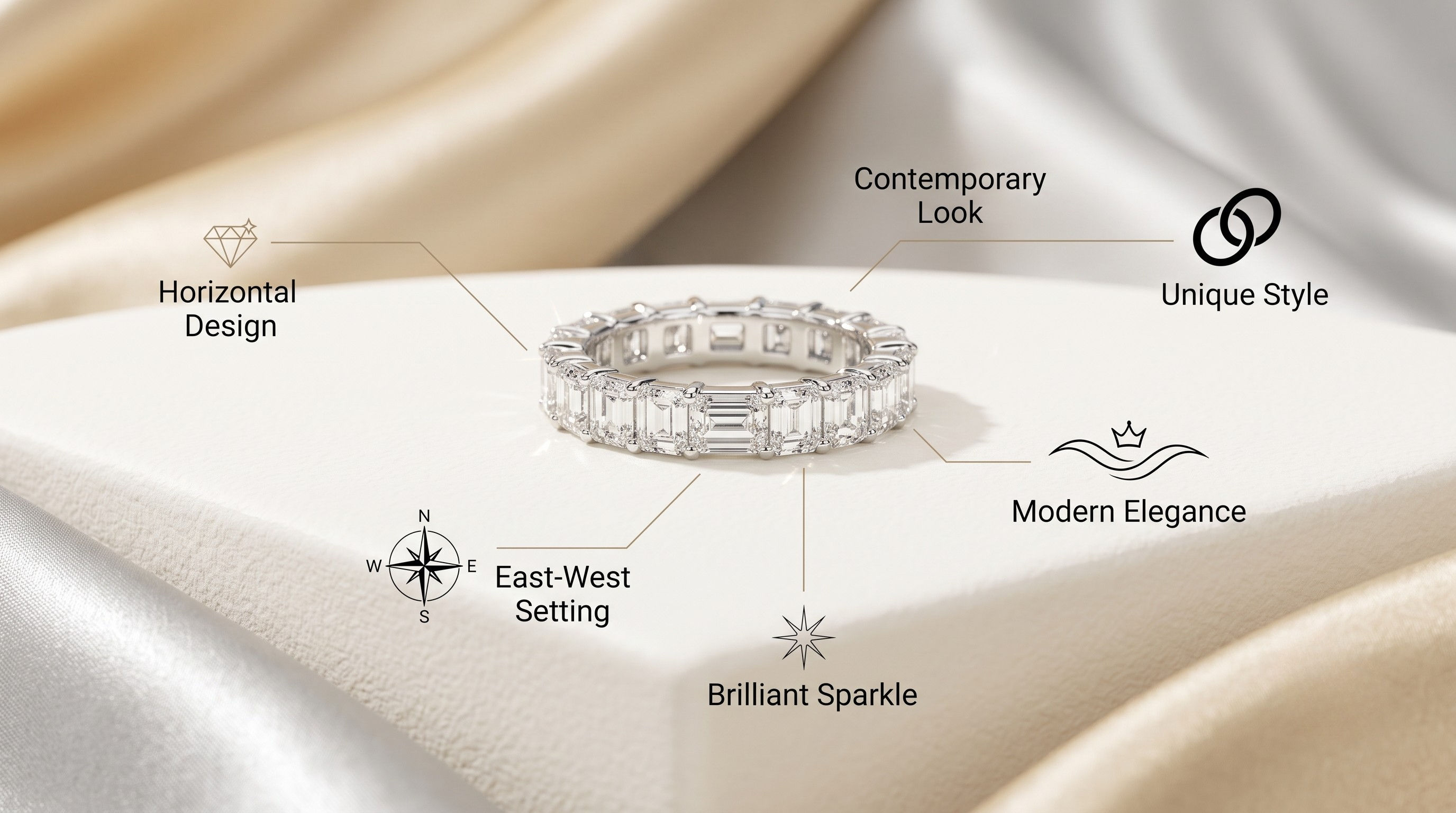
Florence had noticed them on and off for a couple of years before she said anything about it. She'd always been drawn to things that faced a different direction, architecture, furniture, the way certain artists composed a frame against the grain of convention. Finley, who'd spent that National Gallery afternoon arriving at the same opinions as her unprompted, understood immediately when she mentioned east-west diamond bands over dinner one evening. "That's just us, isn't it?" he said. She agreed.
Wedding Diamond Bands in the East-West Style
For a long time, the east-west orientation was mostly associated with engagement rings. But wedding diamond bands in this style have become one of the fastest-growing choices for couples who want their wedding jewellery to feel a little less expected. A band doesn't need a towering centre stone to pull off the east-west look; even a low-profile stone set horizontally across the band creates a completely different kind of ring from anything set vertically. And crucially, it stacks and pairs beautifully with east-west engagement rings, creating a set that looks intentional from every angle.
Finley had wanted to mark their engagement with something, not a traditional solitaire, not a ring she'd feel she had to build her whole hand around. He wanted east-west diamond bands for both of them. The same idea, expressed in two different ways. When they walked into Layla Diamonds together, they told the team that from the start. The team didn't blink.
Oval Diamond Bands and the East-West Setting
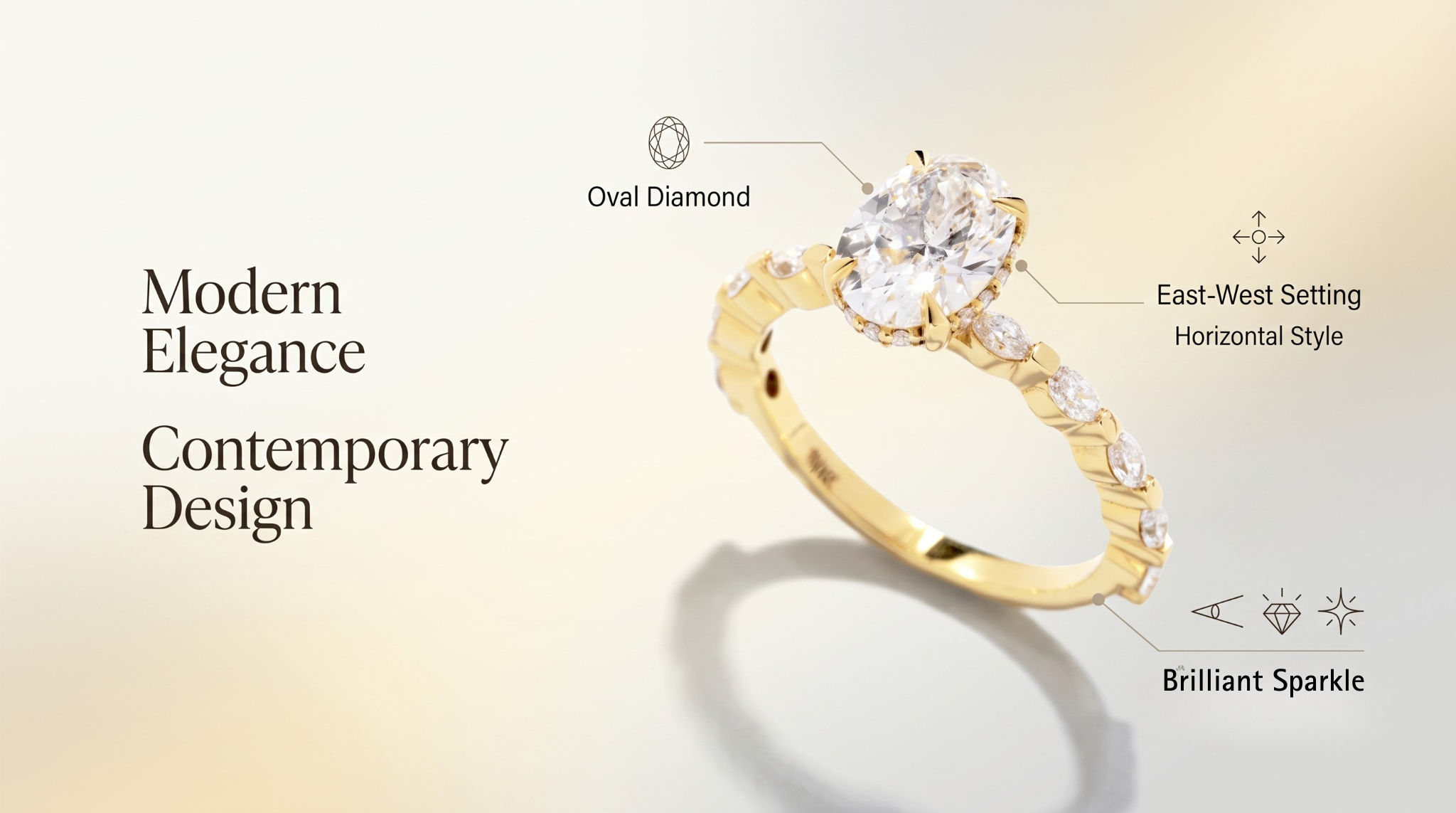
Of all the stone shapes that work well in the east-west orientation, the oval is probably the most satisfying. Oval diamond bands in the east-west setting use the elongated shape of the stone to maximum effect, because the oval now runs across the finger rather than up it, the length of the stone reads as width on the hand, creating an unusually graceful and substantial look without adding height above the finger. It lies flat, it moves with the hand, and the oval's natural brilliance gets to work from a completely different angle than any traditional setting would allow.
Florence chose an oval. She held it against her finger in the Layla Diamonds studio, turned it under the light, and didn't put it down. The east-west diamond bands she'd been drawn to for years turned out to look exactly as she'd imagined when she'd seen one properly made.
Marquise Diamond Band: The Most Dramatic East-West Shape
If the oval is graceful, the marquise diamond band in an east-west setting is a statement. The marquise, pointed at both ends, elongated and architectural, turned on its side, creates a silhouette that stretches almost the full width of the finger. It's the east-west stone that demands the most attention, and on the right-hand side, it pays off spectacularly. Bold, unconventional, completely committed to the horizontal.
Gold Diamond Band: Warm Metal for a Modern Orientation
Metal choice changes the character of the East-West setting considerably. A gold diamond band, whether yellow or rose gold, adds warmth beneath the stone that gives the horizontal orientation a richer, more vintage quality. Yellow gold in particular suits the east-west style beautifully because it echoes the low, wide profile of the setting with a metal that already has a sense of history to it. Florence had been certain she wanted yellow gold from the moment she picked it up.
Lab Grown Diamond Band: The Conscious Choice
Both Finley and Florence had already discussed it before walking into Layla Diamonds. A lab-grown diamond band uses a stone that's chemically and visually identical to a mined diamond, with the same brilliance, same certification, better traceability, and a more accessible price point for the same quality. For two people who'd had a long conversation on their very first date about the ethics of how things are made, it wasn't really a decision that needed much debate.
Diamond Wedding Bands for Women: East West Leading the Way
The surge in interest around diamond wedding bands for women in the East-West style reflects something broader than a trend. Women choosing wedding jewellery now are more likely than ever to look for pieces that feel personal rather than traditional, distinctive rather than safe. The east-west orientation offers that without sacrificing elegance or wearability. It's a real ring, made properly, that simply happens to face the other way.
Men's Diamond Wedding Bands: East West Works Here Too
Finley had been less sure what he wanted for himself, but he'd been drawn to the idea of matching the orientation even if the design differed. Men's diamond wedding bands in the east-west style tend to work with lower profile stones set flush or just above the band surface. A single stone running perpendicular to the ring creates a clean, understated look that reads as deliberate and modern without being showy. He chose a single oval, set horizontally, in the same yellow gold as Florence's. Two bands, same idea, completely their own.
Why East West Diamond Bands Are More Than a Trend
They'd both tried on dozens of things before arriving at the two they left with. But the moment they held the finished east-west diamond bands side by side, not identical, but clearly from the same thought, there was nothing left to decide. The rings that face a different direction, for two people who'd been doing that all their lives without knowing they'd find someone who did it too.
That's what the best east-west diamond bands do. They don't just look different. They mean something specific to the person wearing them, and that specificity is what makes them impossible to forget.
The growing popularity of east-west diamond bands isn't really about aesthetics, though the aesthetic is compelling. It's about a shift toward jewellery that feels like a choice rather than a default. People who wear them tend to know exactly why they chose them. And that kind of intention, at the end of it, is what makes a piece of jewellery last.
Choosing Your East-West Diamond Band
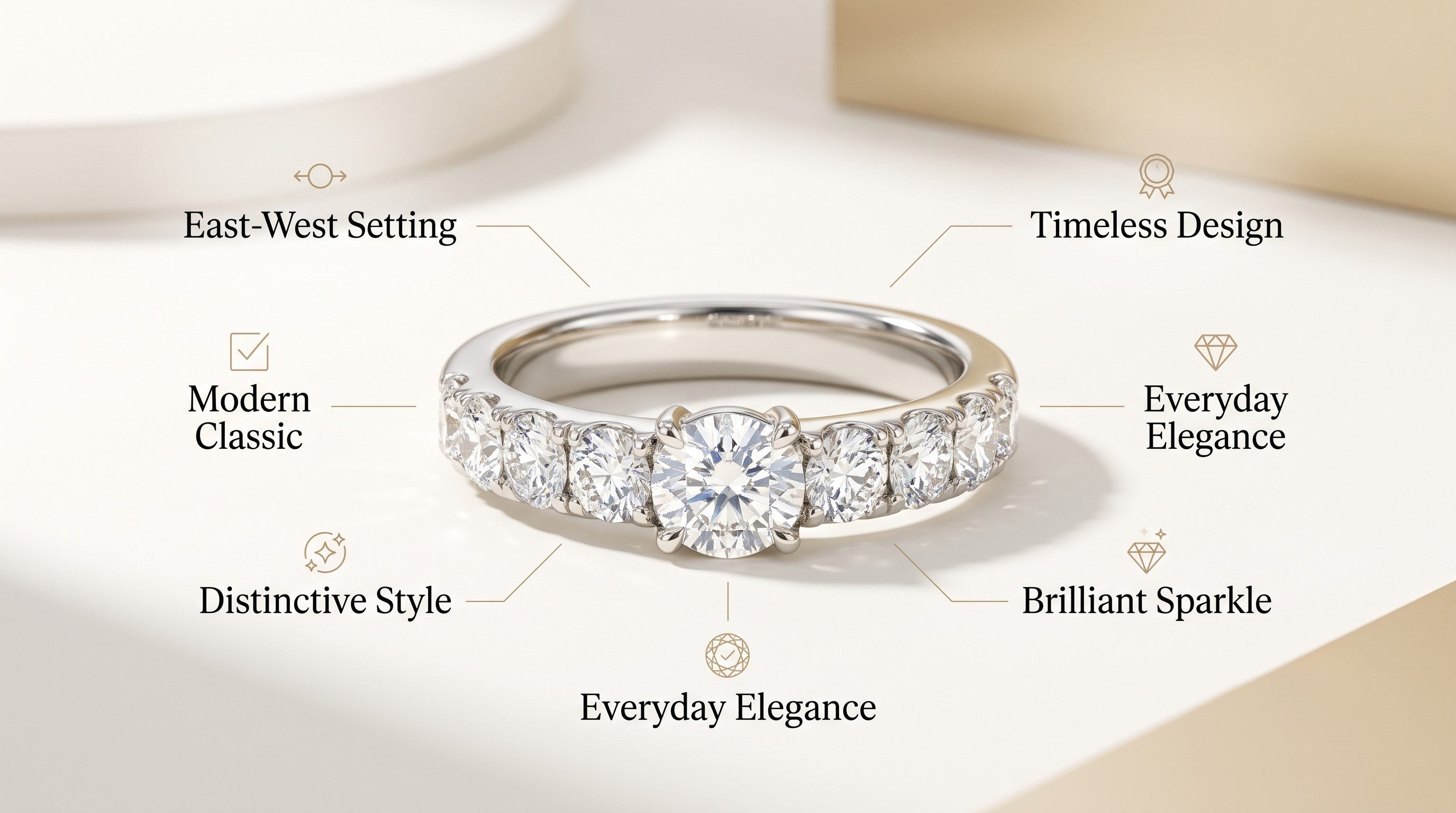
- Horizontal changes everything. A 90-degree rotation shifts the stone across the finger, creating a wider, more architectural silhouette unlike anything traditional.
- Oval is the most satisfying shape. The length reads as width on the hand graceful and substantial without adding height above the finger.
- Marquise is the boldest statement. Pointed at both ends and turned sideways, it stretches almost the full width of the finger.
- Gold adds warmth and history. Yellow gold echoes the low, wide profile of the east-west setting with a metal that already has a sense of history.
- Lab-grown is the conscious choice. Same brilliance, same certification, better traceability, and a more accessible price point.
- Works for both women and men. From delicate horizontal ovals to clean, flush-set minimal bands, the east-west orientation suits everyone.
Ready to Face a Different Direction?
At Layla Diamonds, we design every ring around the people it belongs to. If east-west diamond bands have caught your eye, come and see them in person. Some things only make sense once you're holding them.
Frequently Asked Questions
1. What are east-west diamond bands? ▼
East west diamond bands feature a diamond set sideways, so instead of the usual vertical look, it sits more horizontally, which gives the ring a sort of sleek, modern vibe.
2. Do east-west diamond bands actually feel good day to day? ▼
Yeah, they're made for everyday wear, and the lower profile setting typically feels quite comfortable, like it doesn't get in the way too much on your hand.
3. What diamond shape tends to shine in an east-west setting? ▼
Oval and marquise diamonds are the most common favourites, because that longer shape often looks especially polished when it's set horizontally, kind of elegant but still clean.
4. Can men wear east-west diamond bands? ▼
For sure. East-West styles come for both men and women, ranging from understated minimalist bands all the way to bolder, more noticeable designs.
5. Why are east-west diamond bands catching on so fast? ▼
People seem to love them because they feel fresh and modern, yet they still look timeless and wearable.


Comments
Post a Comment